TL;DR
- Fire inspections help verify that your building’s fire protection systems meet applicable fire codes and NFPA standards.
- Inspectors typically review fire extinguishers, sprinkler systems, suppression systems, alarms, exit signs, emergency lighting, and documentation.
- Most inspection failures are caused by overdue maintenance, blocked equipment, or missing records, not major system failures.
- Preparing ahead of time can help you avoid delays, costly repairs, and failed inspections.
- Partnering with a licensed fire protection company makes the inspection process much easier.
Quick Answer
What happens during a commercial fire inspection?
During a commercial fire inspection, inspectors evaluate your building’s fire protection systems, emergency exits, fire extinguishers, alarms, sprinkler systems, suppression systems, and maintenance records to verify they meet applicable fire codes and NFPA standards. They also identify any deficiencies that must be corrected before the building can remain compliant.
Introduction
Few words make business owners more nervous than “fire inspection.”
Whether you operate a restaurant, warehouse, office building, retail store, apartment complex, or manufacturing facility, a fire inspection is designed to ensure your building is safe for employees, customers, and emergency responders.
The good news is that most inspections are straightforward when your systems are properly maintained. The businesses that experience problems are often dealing with overdue inspections, missing documentation, or maintenance issues that could have been prevented.
Understanding what inspectors look for can help you prepare before inspection day arrives.
Why Fire Inspections Are Important
Fire inspections are designed to:
- Protect occupants
- Reduce fire risks
- Verify life safety systems
- Ensure compliance with fire codes
- Identify deficiencies before emergencies occur
For businesses, they also demonstrate a commitment to safety and help reduce liability.
What Fire Inspectors Check During a Commercial Inspection
Fire Extinguishers
Inspectors verify:
- Proper placement
- Correct mounting height
- Accessibility
- Current inspection tags
- Pressure gauges
- Physical condition
Fire Sprinkler Systems
They review:
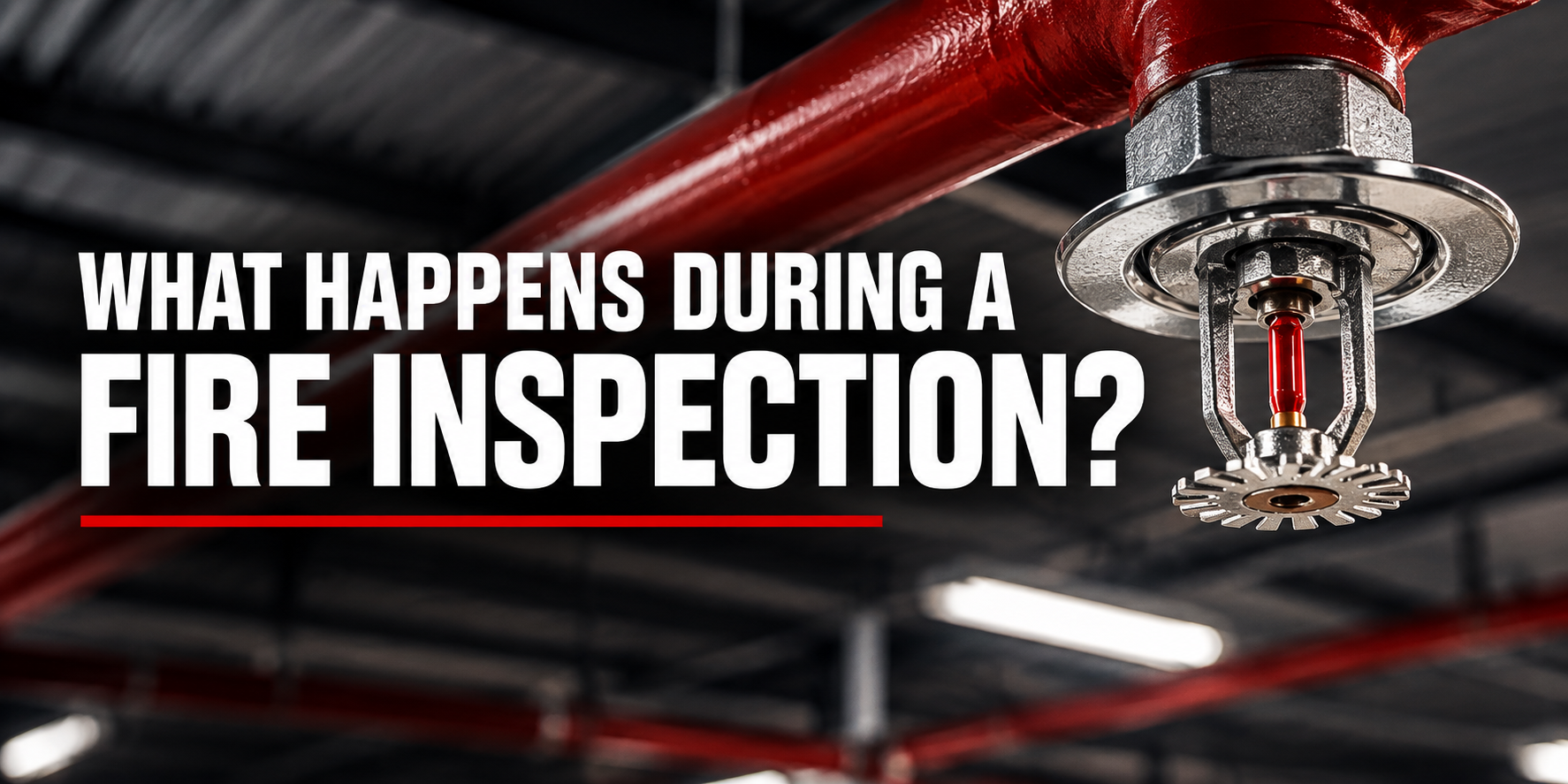
- Sprinkler head condition
- Obstructions
- Control valves
- Inspection reports
- Water supply components
Fire Suppression Systems
Especially in commercial kitchens, inspectors check:
- Inspection tags
- Nozzle placement
- Pull stations
- Cylinders
- Appliance coverage
Fire Alarm Systems
Inspectors ensure:
- Control panels function properly
- Notification devices operate
- Monitoring systems communicate correctly
Emergency Lighting & Exit Signs
Emergency lighting should operate during power loss.
Exit signs must remain illuminated and unobstructed.
Means of Egress
Inspectors verify:
- Exit doors open properly
- Hallways remain clear
- Exit routes aren’t blocked by storage or equipment
Documentation
One of the most overlooked portions of an inspection.
Typical records requested include:
- Sprinkler inspections
- Fire alarm testing
- Hood cleaning reports
- Suppression inspections
- Fire extinguisher service records
7 Common Reasons Businesses Fail Fire Inspections
1. Expired inspection tags
2. Missing maintenance records
3. Blocked sprinkler heads
4. Obstructed fire extinguishers
5. Grease buildup in commercial kitchens
6. Non-functioning emergency lights
7. Unmaintained fire suppression systems
Most of these issues are easy to prevent with routine maintenance.
How to Prepare Before Inspection Day
A few simple steps can make inspections much smoother:
- Review previous inspection reports.
- Verify all inspection tags are current.
- Ensure exits and fire equipment remain accessible.
- Test emergency lighting.
- Organize maintenance records.
- Schedule any overdue inspections before the fire marshal arrives.
Why Preventative Maintenance in Fire Safety is so important
Businesses with scheduled preventative maintenance programs often experience:
- Faster inspections
- Fewer deficiencies
- Reduced emergency repairs
- Better documentation
- Improved compliance
Being proactive is almost always less expensive than reacting after violations are discovered.
What makes Salt City Fire Protection Different
Salt City Fire helps businesses throughout Utah prepare for inspections with:
- Fire sprinkler inspections
- Fire suppression inspections
- Fire extinguisher service
- Commercial hood cleaning
- Fire alarm inspections
- Preventative maintenance agreements
Our goal is to help you pass inspections with confidence while protecting your people and property.
People Also Ask
How often do commercial buildings get fire inspections?
Inspection frequency varies depending on occupancy type, local fire codes, and system requirements. Many fire protection systems require annual or semi-annual inspections.
Can a business stay open after failing a fire inspection?
It depends on the severity of the deficiencies. Minor issues may require correction within a specified timeframe, while serious life safety hazards could require immediate action.
What documents should I have ready?
Keep inspection reports, maintenance records, fire extinguisher service tags, hood cleaning documentation, and sprinkler testing records organized and accessible.
Do inspectors test every fire protection system?
Not always. Some inspections are visual, while others include functional testing or documentation reviews depending on the system and inspection type.
What this blog was meant to show you
- Fire inspections verify your building’s life safety systems are functioning properly.
- Most inspection failures are preventable.
- Documentation is just as important as equipment.
- Routine maintenance reduces costly surprises.
- Working with a licensed fire protection company helps simplify compliance.
Related Fire Protection Services that Salt City Fire offers
Salt City Fire provides:
- Commercial Fire Inspections
- Fire Sprinkler Inspections
- Fire Suppression System Inspections
- Commercial Hood Cleaning
- Fire Alarm Testing
- Fire Extinguisher Inspections
- Preventative Maintenance Programs
Conclusion
A commercial fire inspection doesn’t have to be stressful. When your systems are maintained, your documentation is organized, and your building is prepared, inspections become a routine part of protecting your business.
Rather than waiting until deficiencies are found, take a proactive approach with routine inspections and preventative maintenance. It’s one of the best investments you can make in the safety, compliance, and long-term success of your business.
Contact Salt City Fire today to schedule your fire protection inspection and keep your business inspection-ready year-round.