TL;DR
- A recent warehouse fire in California highlights the importance of maintaining fire protection systems before an emergency occurs.
- Fire sprinklers, suppression systems, alarms, and extinguishers require regular inspections and testing.
- Small issues such as expired inspections, blocked nozzles, or missing documentation can create major problems during an emergency.
- Routine inspections help businesses stay compliant with NFPA standards and local fire codes.
- Working with a licensed fire protection company helps ensure systems remain operational and inspection-ready.
Quick Answer
Why are routine fire system inspections important?
Routine fire system inspections help identify hidden issues before they become emergencies. Regular inspections ensure fire sprinklers, suppression systems, alarms, and extinguishers function properly, remain code compliant, and are ready to protect people and property during a fire.
A warehouse fire erupted in California that could’ve been easily prevented with the right upkeep
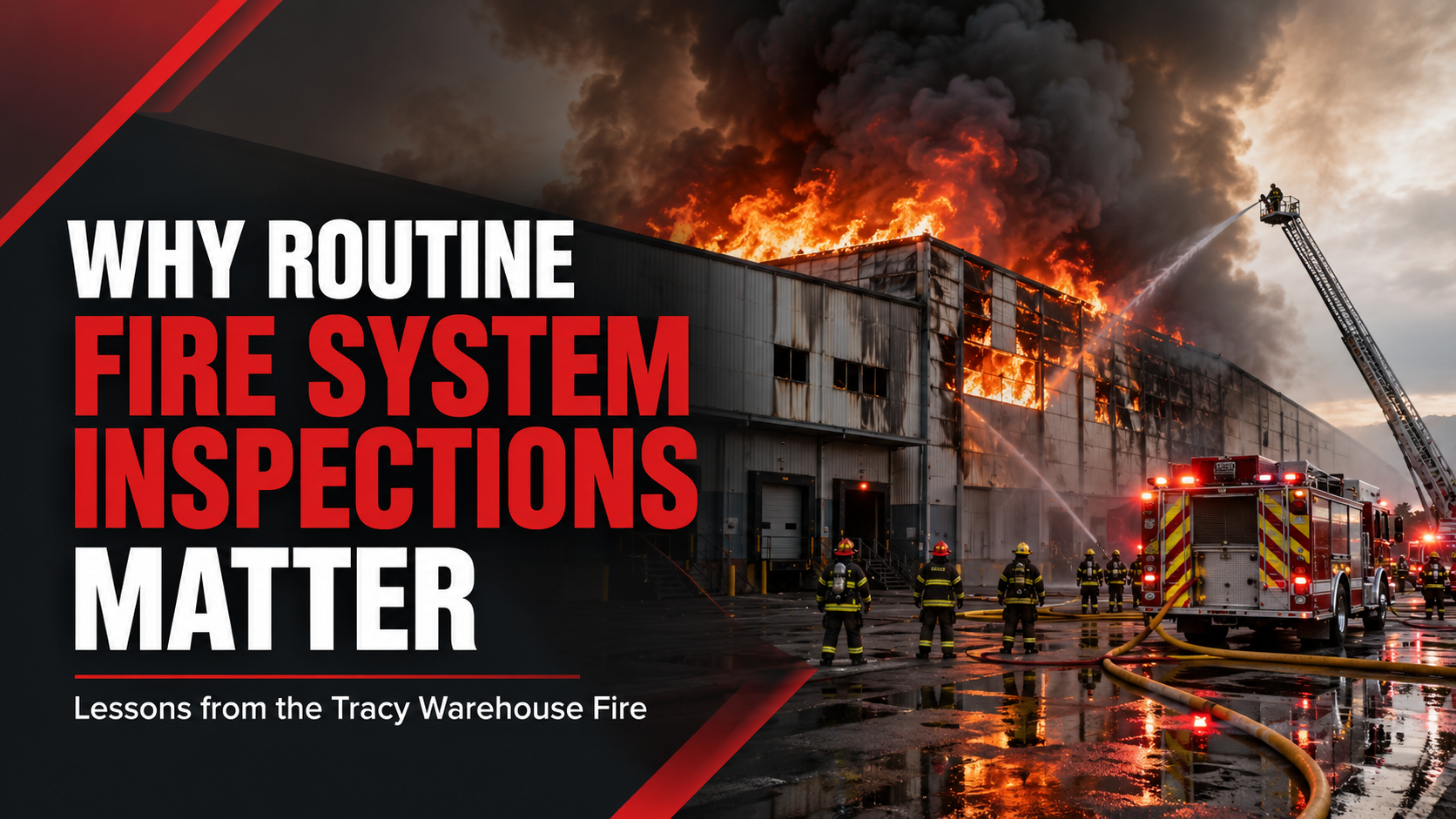
A massive warehouse fire at a large distribution facility in Tracy, California recently drew national attention. The fire required a significant emergency response and caused extensive damage to the facility. Fortunately, employees were safely evacuated and no serious injuries were reported.
While investigators continue working to determine the exact cause of the fire, the incident serves as an important reminder for businesses across Utah and the country: fire protection systems must be more than installed. They must be regularly inspected, tested, maintained, and ready to perform when needed.
For property owners, facility managers, restaurant operators, and warehouse operators throughout Salt Lake City, this event highlights the value of preventative fire protection maintenance and routine inspections.
What Happened During the California Warehouse Fire?
The fire occurred at a large distribution facility in Tracy, California, involving a substantial commercial warehouse structure. Fire crews from multiple agencies responded to contain the incident and prevent further spread.
While the official investigation remains ongoing, reports from responding agencies indicated challenges associated with portions of the building’s fire protection infrastructure during the emergency response.
For business owners, the most important takeaway is not speculation about the cause. The lesson is understanding how critical properly maintained fire protection systems are when emergencies occur.
The best fire protection systems are the ones that are prepared long before they’re needed.
Why Fire Protection Systems Require Ongoing Inspections
Many business owners assume that once a fire protection system is installed, it will remain operational indefinitely.
Unfortunately, that is not how fire protection systems work.
Like any critical life safety equipment, these systems require regular inspections, testing, and maintenance to remain effective.
Common issues that develop over time include:
- Corrosion
- Low pressure
- Damaged components
- Blocked sprinkler heads
- Grease accumulation
- Outdated documentation
- Valve issues
- Electrical failures
Without routine inspections, many of these problems remain unnoticed until an emergency occurs.
7 Lessons Businesses Can Learn from the Tracy Warehouse Fire
1. Fire Protection Systems Need Regular Testing
A system that appears functional may not perform correctly under emergency conditions.
Routine testing verifies:
- Proper activation
- Water flow
- Pressure levels
- Alarm communication
- System integrity
Testing helps identify deficiencies before they become liabilities.
2. Fire Sprinklers Need Ongoing Maintenance
Sprinklers are often the first line of defense during a fire.
Over time, sprinkler systems can experience:
- Corrosion
- Obstructions
- Mechanical wear
- Valve issues
Routine inspections help ensure sprinkler systems remain ready to operate when needed.
3. Suppression Systems Require Semi-Annual Inspections
Commercial kitchens and specialized facilities rely heavily on fire suppression systems.
These systems should be inspected regularly to verify:
- Proper nozzle coverage
- Correct pressure levels
- Functional pull stations
- Reliable detection mechanisms
Missed inspections are one of the most common fire code violations.
4. Documentation Matters More Than Most Businesses Realize
Inspectors often ask for:
- Inspection reports
- Maintenance records
- Service certificates
- Compliance documentation
Even if a system is functioning properly, missing documentation can create compliance issues.
5. Building Changes Can Impact Fire Protection
Facilities evolve over time.
Businesses frequently:
- Add equipment
- Rearrange storage
- Remodel spaces
- Change occupancy use
These changes can impact fire protection coverage and should be reviewed during inspections.
6. Preventative Maintenance Costs Less Than Emergency Recovery
Routine maintenance is one of the most cost-effective investments a business can make.
Preventative inspections help reduce:
- Emergency repairs
- Downtime
- Failed inspections
- Insurance complications
- Property damage risks
7. Work With Licensed Fire Protection Professionals
Perhaps the most important lesson from any major fire event is the importance of qualified service providers.
Licensed fire protection companies understand:
- NFPA requirements
- Local code compliance
- Testing procedures
- Documentation standards
- Inspection schedules
Proper expertise can make a significant difference in long-term system reliability.
Common Fire Protection Problems Found During Inspections
During routine inspections, technicians commonly discover:
– Expired Inspection Tags
Missed inspections immediately create compliance concerns.
– Dirty or Blocked Suppression Nozzles
Especially common in commercial kitchens.
– Missing Documentation
A major issue during inspections.
– Damaged Fire Extinguishers
Low pressure, physical damage, or expired service intervals.
– Grease Buildup in Hood Systems
One of the leading causes of restaurant fire violations.
– Obstructed Sprinkler Heads
Storage too close to sprinkler systems reduces effectiveness.
– Faulty Alarm Components
Aging devices can compromise emergency notification.
How often should fire protection systems be inspected?
Inspection frequency depends on the system type. Many fire suppression systems require inspections every six months, while sprinkler and alarm systems follow additional NFPA inspection schedules.
Who can perform fire system inspections in Utah?
Licensed fire protection companies with trained and certified technicians should perform inspections and testing.
What causes businesses to fail fire inspections?
Common causes include expired inspection tags, missing documentation, dirty suppression nozzles, blocked exits, and neglected maintenance.
Do fire protection systems need maintenance if they haven’t been used?
Yes. Fire protection systems require ongoing maintenance regardless of whether they have discharged or activated.
Why are inspection records important?
Inspection records demonstrate compliance and help verify that systems have been properly maintained.
Key Takeaways from this tragedy
- Fire protection systems require ongoing inspections and maintenance.
- Small deficiencies can become major problems during emergencies.
- Documentation is a critical part of compliance.
- Licensed professionals help ensure systems remain operational and code compliant.
- Preventative maintenance is far less expensive than emergency recovery.
How Salt City Fire can keep you compliant
Salt City Fire Services
Salt City Fire provides fire protection services for every aspect of keeping you and your business safe. Whether it’s a one-time inspection, or maintenance plans we can help with:
- Fire Sprinkler Inspections
- Fire Suppression System Inspections
- Commercial Hood Cleaning
- Fire Extinguisher Inspections
- Fire Alarm Testing
- Preventative Maintenance Agreements
Our team helps businesses throughout Salt Lake City and Northern Utah stay compliant, protected, and prepared.
What does this mean for local business owners?
The California warehouse fire serves as an important reminder that emergencies rarely happen when it’s convenient.
While the investigation continues, one lesson is already clear: businesses cannot assume their fire protection systems will work simply because they were installed years ago.
Routine inspections, preventative maintenance, and qualified fire protection professionals help ensure that when an emergency occurs, your systems are ready to perform.
Contact Salt City Fire today to schedule a fire protection inspection and ensure your facility remains compliant, protected, and prepared.