Understanding Hood Cleaning Costs, Inspection Requirements, and What Impacts Pricing
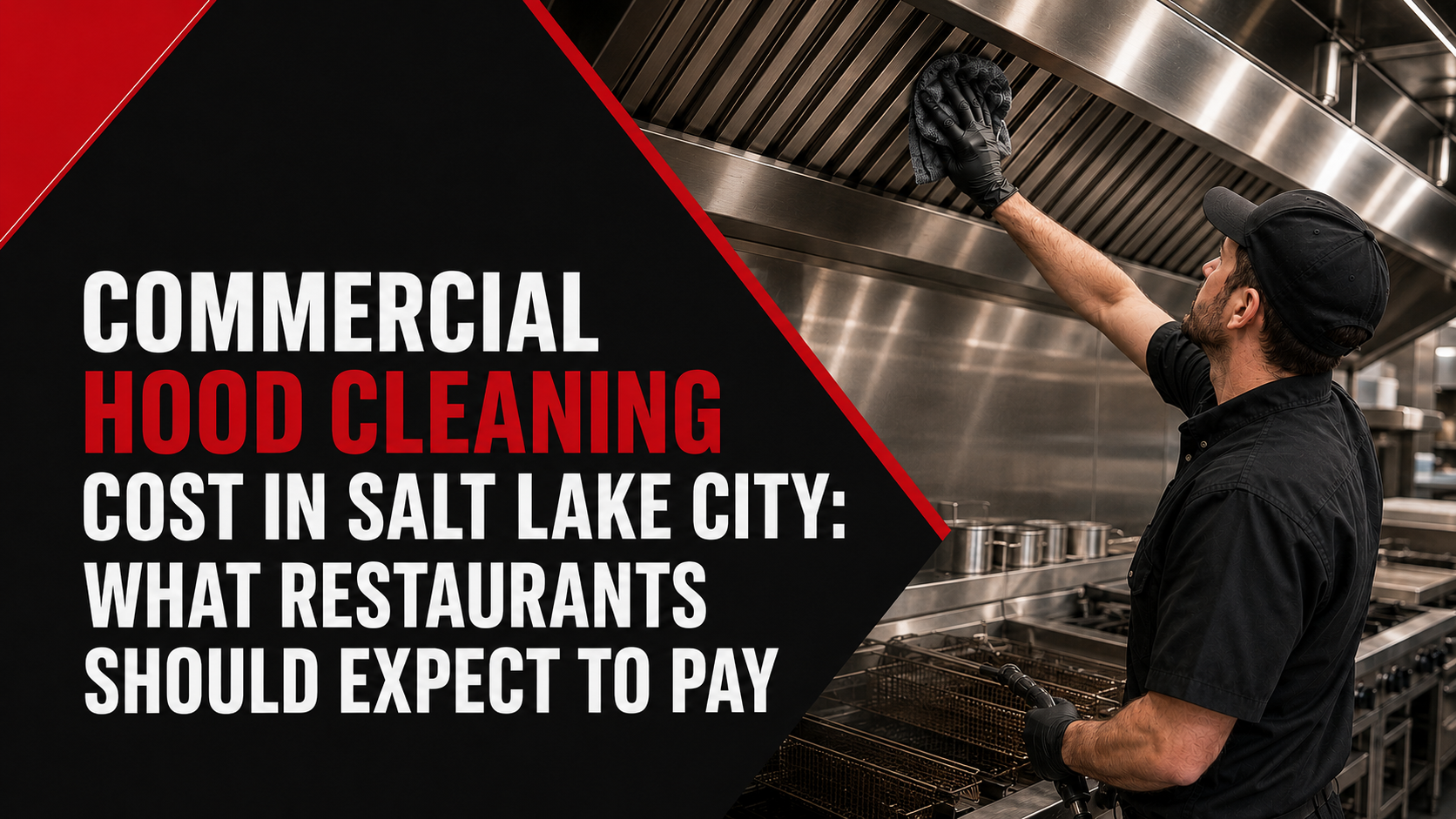
For restaurant owners in Salt Lake City, hood cleaning is not just another maintenance expense. It is a critical fire safety requirement that protects your staff, customers, and business from potentially devastating grease fires.
One of the most common questions we hear is:
“How much does commercial hood cleaning cost in Salt Lake City?”
The answer depends on several factors, including kitchen size, cooking volume, grease accumulation, and cleaning frequency. Understanding these variables helps restaurant owners budget appropriately while ensuring compliance with NFPA 96 and local fire code requirements.
In this guide, we’ll break down the average cost of commercial hood cleaning, what influences pricing, and how regular service can actually save money over time.
Why Hood Cleaning Is Required
Every commercial kitchen generates grease vapor during cooking. As that vapor cools, it sticks to hood surfaces, ductwork, and exhaust fans.
Over time, this buildup creates:
- Fire hazards
- Airflow restrictions
- Equipment strain
- Failed inspections
- Potential insurance issues
The National Fire Protection Association requires commercial kitchen exhaust systems to be cleaned regularly under NFPA 96 standards.
Average Hood Cleaning Costs in Salt Lake City
While every kitchen is different, most businesses fall within the ranges below, however, it is good to note that every business is going to need a personalized plan so these numbers may not be 100% relevant.
Small Commercial Kitchens
Examples:
- Coffee shops
- Small cafes
- Delis
Typical Range:
$300 – $600 per cleaning
Standard Restaurants
Examples:
- Sit-down restaurants
- Casual dining establishments
- Local chains
Typical Range:
$500 – $1,200 per cleaning
High-Volume Kitchens
Examples:
- Fast food restaurants
- Steak houses
- Fry-heavy operations
- Hotels
Typical Range:
$1,000 – $2,500+ per cleaning
Large Multi-Hood Facilities
Examples:
- Hospitals
- Universities
- Commissary kitchens
- Food production facilities
Typical Range:
$2,500+ per cleaning
7 Factors That Impact Hood Cleaning Cost
1. Hood System Size
The larger your hood system, the more labor and cleaning solution required.
Factors include:
- Linear hood footage
- Duct length
- Number of exhaust fans
2. Cooking Volume
Heavy grease-producing operations require more intensive cleaning.
Examples:
- Fryers
- Griddles
- Charbroilers
- Wok stations
These systems accumulate grease much faster than lower-volume kitchens.
3. Cleaning Frequency
Ironically, kitchens cleaned more frequently often cost less per visit.
Monthly maintenance is usually easier and less labor-intensive than cleaning years of accumulated grease.
4. Accessibility
Hard-to-access ductwork increases labor requirements.
Common challenges include:
- Long vertical duct runs
- Roof access issues
- Multiple floors
- Tight mechanical spaces
5. Condition of the System
A heavily neglected system may require:
- Additional scraping
- Degreasing treatments
- Fan disassembly
- Extended labor hours
6. After-Hours Service Requirements
Many restaurants request overnight cleaning to avoid disrupting operations.
While convenient, off-hours scheduling can affect pricing.
7. Compliance Documentation
Professional providers include:
- NFPA 96 compliance tags
- Before-and-after photos
- Service reports
- Inspection-ready documentation
These deliverables provide significant value beyond the cleaning itself.
Why Cheap Hood Cleaning Can Cost More
Restaurant owners occasionally choose the lowest-priced provider only to discover later that:
- Ductwork was never cleaned
- Fans were skipped
- No documentation was provided
- Inspection tags were missing
This often results in:
- Failed inspections
- Re-cleaning expenses
- Fire code violations
Professional hood cleaning should include the entire system, not just visible surfaces.
How Often Should Restaurants Schedule Hood Cleaning?
NFPA 96 recommendations:
Monthly
- Charbroiling operations
- Fast food restaurants
- High-volume kitchens
Quarterly
- Most full-service restaurants
Semi-Annually
- Moderate-use facilities
Annually
- Low-volume kitchens
Following the proper schedule helps maintain compliance and reduces long-term cleaning costs.
The Hidden Cost of Delaying Hood Cleaning
Skipping cleanings may save money today, but often creates larger expenses later.
Potential consequences include:
Failed Fire Inspections
Many Utah restaurants fail inspections because of excessive grease buildup.
Fire Damage
Kitchen fires can spread rapidly through dirty duct systems.
Insurance Complications
Many carriers require proof of routine maintenance.
Emergency Cleaning Fees
Rush cleanings after failed inspections often cost significantly more.
Why Salt Lake City Restaurants Trust Salt City Fire
Salt City Fire provides:
- NFPA 96-compliant hood cleaning
- Before-and-after documentation
- Compliance tags
- Fire inspection preparation
- Flexible service schedules
- Preventative maintenance agreements
Our goal is simple: keep your kitchen compliant, protected, and operating without interruption.
Hood Cleaning Is an Investment in Safety
When evaluating hood cleaning costs, it’s important to consider the bigger picture.
Regular service helps:
- Prevent fires
- Pass inspections
- Protect insurance coverage
- Extend equipment life
- Reduce long-term expenses
A professional hood cleaning program isn’t just maintenance. It’s one of the most important fire prevention investments your restaurant can make.
Contact Salt City Fire today for a customized hood cleaning quote and maintenance plan.